Greece has passed "successfully" the test of the elections, if you look at it from the point of view of European institutions and, more generally, of North-West European governments. A center right government has been elected, joining the fledgeling forces of Nea Democratia (winner because of the 50 MP's bonus) to the beaten down PASOK and the Democratiki Aristera alibi (DA, the untainted ones if you prefer). Although they all promised to renegotiate the Memorandum of Understanding with the European Troika, they all know that it is pointless, at best providing marginal relief in terms of growth stimulation. Nevertheless, the spectre of a takeover by demagogic groups like Syriza is out of the way and reforms, the most painful ones are being undertaken.
Unfortunately, the very fact that the test was successful will make the recovery even more difficult. It sounds contradictory, but it is quite logical. The parties in favor of maintaining this road to recovery are also the same corrupt phony elites that put the country there in the first place. To the exception of DA, the Ministers and more importantly the MP's in the majority are the incompetent people who have been feeding on the back of the Greek citizens since the Greek Civil War. And, very rightfully, many commentators (myself included) have pointed out the irony of letting the thieves policing and judging the robbery. Because let's be realistic here: it is grand theft we are talking about, and on a massive scale. In Greece, from the lowest level to the highest, everybody is on the take. There are very few exceptions, be it amongst higher civil servants or politicians. While generalizations are dangerous, you could be forgiven in assuming that any politician you name is probably doubling his/her already quite generous salary with bribes.
But the problem is way beyond this. Even if Greece, by some miracle, finds a sure way tomorrow towards growth and economic recovery, its budget and financial structure is mined by a major issue: there is no respect for the rule of law. In fact, when you look at it, even superficially, Greece has the means to balance its budget and recover enough taxes and State income to pay for decent government expenses. All it needs to do (easier said than done) is to enforce and apply its own laws. It needs everyone, from the simplest citizen to the bigger multinational business to pay taxes, it needs people to follow the rules and be fined or prosecuted if they don't and it needs everyone to stop stealing from the State. Because while stealing from the State, while it looks like a victimless crime, is in fact a crime against oneself and everyone else. Greeks simply don't understand this.
The illusion is that only fat cats and politicians steal, take bribes and tax evade. But the sad truth is that everyone does. Worse, even "honest people" simply have no respect for the rule of law. It begins with the simplest things: traffic rules, receipts in small transactions, and so on. No law is respected and no one enforces them. Cops rarely give tickets and never check traffic. As a result, not only they don't get money from fines, but they are not respected either. And of course, the Greek traffic is extremely deadly, with numerous accidents and severe consequences. So it is true that Greece needs to stop the tax evasion of its super-rich, the thieves living in their Filoteia and Kifissia villas, surrounded by barb wires and armed private guards. But it is also true that it is the entire mentality of a country which needs to change, from the taxi driver to the hair dresser to the cop to the city hall employee to the Prime Minister. Without this, Greece will remain the third world country it is, on par with Morocco for corruption and Yemen for ease of creating a business.
Greece can be a rich country, as it has the resources and the infrastructure to sustain itself easily. All it needs is to switch to modernity, not by creating more laws but by applying them and by switching on the very mind of the citizens. It is going to be a long process and a painful one. I wonder when it will start...
Tweet
23 July 2012


19 June 2012
Elections in Sun land
Unless you have lived under a stone for the last five years, you would know that there were elections in Greece to vote a new Parliament in. And you might know that it was the second time in a month, due to the inability of the politicians to work together for the good of the nation to form a new government.
This second round meant that the winner would be nearly automatically ensured to be able to get a majority or at least to build a coalition with only one other party. Indeed, the winner gets a bonus of 50 seats in the Assembly of 300 representatives, usually enough to make the difference. Here are the final results in English.
 In this case, and while the winner, conservative Nea Democratia (ND), did clinch a relative majority, even these 50 seats were not enough and it will have to build a coalition (129 seats < 151). Nothing too bad, mind you, as the only other party which clearly announced it could work with ND was "socialist" PASOK who got enough seats to complete a solid majority (33 seats + 129 = 162 > 151). The self declared opposition party, SYRIZA, a coalition of no-communists, socialists and anarchy-unionists, got 71 seats. But the legitimacy of such a majority is extremely low. If one looks at the percentage of expressed votes, the 162 seats represent in fact 41.94% of the voices. SYRIZA would have an easy claim that, allied with parties opposed to the ND and PASOK policy, they represent more of the people. Legitimacy is a tricky thing in a democracy. As my old Constitutional Law teacher used to say, ultimate power is not in the majority in an election but in the street violence that the people can unleash if they don't feel represented.
So the real strength of ND will be its ability to attract the support (at least in the Parliament if not in the government) of another ally, in order to get this badly lacking legitimacy. ND and PASOK asked SYRIZA to join, but its leader, Alexis Tsipras, is too clever for Greece's own good and refused flatly. He knows that his popularity is only linked to his new boyish face and empty promises. If he joins the majority, he will disappear politically. So Antonis Samaras and Evangelos Venizelos (the ND and PASOK leaders respectively) will have to cut a deal with another party or two. The most obvious candidate is the smaller Democratiki Aristera (Democratic Left), a moderate party of progressive leaning technocrats. Its leader, Fotis Kouvelis, previously rejected such a deal, but concessions by ND and PASOK and opening by German negotiators could make him change his mind. Same is true for Anexartitoi Ellines (Independant Greeks), an ultra-conservative group of Church and Fatherland types.
None of these two parties got enough votes to help the future government cross the 50% votes legitimacy threshold. But, if both join, this threshold would be passed. Such a scenario is highly unlikely. To be honest, the presence of any of the two is very likely to prevent the other from joining as their ideologies are diametrically opposed. There is only so much you can ask for the good of the country...
Tweet
This second round meant that the winner would be nearly automatically ensured to be able to get a majority or at least to build a coalition with only one other party. Indeed, the winner gets a bonus of 50 seats in the Assembly of 300 representatives, usually enough to make the difference. Here are the final results in English.
 In this case, and while the winner, conservative Nea Democratia (ND), did clinch a relative majority, even these 50 seats were not enough and it will have to build a coalition (129 seats < 151). Nothing too bad, mind you, as the only other party which clearly announced it could work with ND was "socialist" PASOK who got enough seats to complete a solid majority (33 seats + 129 = 162 > 151). The self declared opposition party, SYRIZA, a coalition of no-communists, socialists and anarchy-unionists, got 71 seats. But the legitimacy of such a majority is extremely low. If one looks at the percentage of expressed votes, the 162 seats represent in fact 41.94% of the voices. SYRIZA would have an easy claim that, allied with parties opposed to the ND and PASOK policy, they represent more of the people. Legitimacy is a tricky thing in a democracy. As my old Constitutional Law teacher used to say, ultimate power is not in the majority in an election but in the street violence that the people can unleash if they don't feel represented.
So the real strength of ND will be its ability to attract the support (at least in the Parliament if not in the government) of another ally, in order to get this badly lacking legitimacy. ND and PASOK asked SYRIZA to join, but its leader, Alexis Tsipras, is too clever for Greece's own good and refused flatly. He knows that his popularity is only linked to his new boyish face and empty promises. If he joins the majority, he will disappear politically. So Antonis Samaras and Evangelos Venizelos (the ND and PASOK leaders respectively) will have to cut a deal with another party or two. The most obvious candidate is the smaller Democratiki Aristera (Democratic Left), a moderate party of progressive leaning technocrats. Its leader, Fotis Kouvelis, previously rejected such a deal, but concessions by ND and PASOK and opening by German negotiators could make him change his mind. Same is true for Anexartitoi Ellines (Independant Greeks), an ultra-conservative group of Church and Fatherland types.
None of these two parties got enough votes to help the future government cross the 50% votes legitimacy threshold. But, if both join, this threshold would be passed. Such a scenario is highly unlikely. To be honest, the presence of any of the two is very likely to prevent the other from joining as their ideologies are diametrically opposed. There is only so much you can ask for the good of the country...
Tweet
11 June 2012
Politics in Greece
It is very difficult to understand Greece with North-West Europe references. Not that Greece is particularly "exotic" or "alien", but mostly because it has a rather troubled recent History that most foreigners or visiting tourists don't know well (and I was one of these poorly informed people). The political landscape in Greece used to be rather simple, at least seen from the outside, opposing since 1974 conservatives (Nea Democratia) to socialists (PASOK). Fringe smaller parties also existed, such as populist right wing LAOS (a Church and fatherland resurgence of older parties) or the older Communist KKE (pronounce koeh-koeh-A). But they never were in a position to challenge the duopoly of the two party system and the fact is that most current and numerous parties in Greece did not exist under their current form only 10 years ago.
Most of this is linked to the fact that Greece, from 1967 to 1974, was under the regime of conservative putschist colonels. Both conservative and socialist parties were created as a reaction to this regime and the communist KKE (which had been clandestine since the end of the Second World War) was only legalized at this time too. This has had a profound influence on the way Greek citizens view authority, political parties and ideologies. Parties were identified, consciously or not, in relation to their relationship with the colonels' junta (as it is called in Greece) and ideologies, behaviors, political myths and realities are also shaped by the trauma of the brutal dictature. Nationalist parties are often associated to this regime and illegal or damaging activities of leftist ones are often considered less negatively, because of their resistance to it.
All this changed in the last 10 to 5 years, and even more with the recent economic crisis. The political system has suddenly exploded, ending the dominance of the two party system. New players in the political field include radical left Syriza, Democratic Left (Aristera), Golden Dawn (neo-nazis), the ecologist Green and LAOS (Religious Nationalists). Most of these parties embody in fact, a certain modernity in the Greek system, for the better and for the worst. Indeed, all these new parties reflect issues and ideas that are found now in most other democracies, but which were prevented from expressing themselves by the two-party system. I use this term on purpose, as this "system" was not in any way a product of the Constitution of the IIIrd Hellenic Republic, but because it was, in my opinion a perversion of it. In other terms, both conservative and socialist put in place a strong nepotism and clientele system, corrupting the Greek democracy and effectively preventing the occurrence of political and ideological alternative. Of course, one should avoid excessive generalisation, and both parties certainly had honest members. But the leadership of these parties clearly and obviously maintained their power by way of services against votes and money against services. To get anything done in Greece (public or private) you would need a political support in one of these two parties. To a certain extent, this is still true today.

But the emergence and rise of other political and ideological offer, as well as the systematic failure by both traditional parties to handle the economic crisis, making it even worse, has created the current political quagmire. No party at the moment can claim any kind of majority. But more importantly, the separation between the parties no longer reflect the right or left paradigm but also the separation between old school politics and the new ways. The issue is as much generational as it is ideological. Hence the impossibility to build any coalition between parties which should, from an external point of view, be logical allies. It goes against the mentality of the politician involved but also against years of History. They are unable to handle the crisis or give coordinated answer to Greece's problems simply because there is no structure any more in Greece politics.
Tweet
Most of this is linked to the fact that Greece, from 1967 to 1974, was under the regime of conservative putschist colonels. Both conservative and socialist parties were created as a reaction to this regime and the communist KKE (which had been clandestine since the end of the Second World War) was only legalized at this time too. This has had a profound influence on the way Greek citizens view authority, political parties and ideologies. Parties were identified, consciously or not, in relation to their relationship with the colonels' junta (as it is called in Greece) and ideologies, behaviors, political myths and realities are also shaped by the trauma of the brutal dictature. Nationalist parties are often associated to this regime and illegal or damaging activities of leftist ones are often considered less negatively, because of their resistance to it.
All this changed in the last 10 to 5 years, and even more with the recent economic crisis. The political system has suddenly exploded, ending the dominance of the two party system. New players in the political field include radical left Syriza, Democratic Left (Aristera), Golden Dawn (neo-nazis), the ecologist Green and LAOS (Religious Nationalists). Most of these parties embody in fact, a certain modernity in the Greek system, for the better and for the worst. Indeed, all these new parties reflect issues and ideas that are found now in most other democracies, but which were prevented from expressing themselves by the two-party system. I use this term on purpose, as this "system" was not in any way a product of the Constitution of the IIIrd Hellenic Republic, but because it was, in my opinion a perversion of it. In other terms, both conservative and socialist put in place a strong nepotism and clientele system, corrupting the Greek democracy and effectively preventing the occurrence of political and ideological alternative. Of course, one should avoid excessive generalisation, and both parties certainly had honest members. But the leadership of these parties clearly and obviously maintained their power by way of services against votes and money against services. To get anything done in Greece (public or private) you would need a political support in one of these two parties. To a certain extent, this is still true today.

But the emergence and rise of other political and ideological offer, as well as the systematic failure by both traditional parties to handle the economic crisis, making it even worse, has created the current political quagmire. No party at the moment can claim any kind of majority. But more importantly, the separation between the parties no longer reflect the right or left paradigm but also the separation between old school politics and the new ways. The issue is as much generational as it is ideological. Hence the impossibility to build any coalition between parties which should, from an external point of view, be logical allies. It goes against the mentality of the politician involved but also against years of History. They are unable to handle the crisis or give coordinated answer to Greece's problems simply because there is no structure any more in Greece politics.
Tweet
01 June 2012
Greece at last or new beginning
After nine months of letting this blog pretty much slowly die, I have decided that my personal circumstances were justifying a relaunch. Due to private reasons, I just relocated to Greece, in Nea Ionia (Attika). Many friends and relative have been a bit shocked or at least surprised by this decision, considering that Greece is going currently through quite difficult times. The country is experimenting a dreadful economic crisis, while the political crisis is raging at the same time. I thought it would be interesting for readers to hear from me what it means to live this daily.
 It has definitely a very strong link to the main topic of this blog, as, if you want to believe most media, Greece issues are now European ones and the solutions and problems we are experimenting here are dealt with at the European level. More generally, it seems to me and many other observers that the crisis which is so acutely felt here is also a symptom of the more general problems that Europa is currently experiencing. It can be seen through the local prism of the budget and debt issue, but it can also be described as a growth crisis of the European concept. Solidarity, economic rationality, democracy, federalism and nationalism are all being tested simultaneously and how we (citizens) are going to answer this is going to determine the future of this continent, not just the price of bread in Athens.
Tweet

Tweet
18 January 2012
Happy 2012
Happy New Year! OK, it is horribly late... But I wish you all a pleasant new year 2012. I especially wish it to be better than 2011, which was an execrable year in so many ways.  New year means new good resolutions. This apple is there as a symbol of sound(er) eating and healthy diet...
Enjoy!
Tweet

Enjoy!
Tweet
07 October 2011
Two Party System
Democracy (as understood in the Western concept of the word) has existed in all kinds of ways and institutional constructions. All of these constructions have included the idea that one of the fundamental rights of the citizens was to organize themselves in political structures conveniently called "parties". Gathering of people interested in the same ideas, as well as vehicles for the personal ambitions of some, parties have always been a fixture of democracy (and even of many non-democratic regimes). The European institutions recognized this too and parties exist at the European level, even though they have some difficulty to be recognized by the EU polity.
This said, there are fundamental differences between the party set up in the different democratic countries. In some countries, they are simple associations of citizens, with little more difference with a sport club than their objectives. In others, they are an integral part of the institutions, with a status well apart from other groups of citizens. Another major distinction between party systems is simply their number in a a given country. Some countries have essentially a two party system (to simplify, 'left vs. right"), some have a three party one and many if not most have a multiple party system. It would be extremely disingenuous to pretend that these difference have no effect on the political institutions and the political life of a country. On the contrary, these differences actually contribute to define the institutions and are in turn defined by them. But, unlike the constitution of a country, the party set up is rarely or never fixed. This can have tremendous and unexpected effects.
Let's take a couple of example. The USA, for instance, have a two party system, very rigid and highly integrated in the country's institutions. Parties there are in no way ordinary associations, but there is simply little political life outside of the Republican and Democrat parties. The United Kingdom recently evolved from a quasi two party system to a theoretical three party one. Although we could argue that the UKIP is a 4th player, it weighs too little in the country's institutions to seriously threaten the Tories, Labour and LibDem hold on power. France, Germany or the Netherlands are all multiple party set up, at least to a point. While the weight of the different Dutch parties can be reasonably considered as truly variable, France and Germany both have a very dominant right and left parties (UMP and PS in France, CDU-CSU and SPD for Germany). But even in France and Germany, smaller parties can and do actually play a role, would it only be the "king maker" one between the dominant right and left formations.
It is interesting to see that the current massive global crisis which has struck the Western world has affected the political life of these countries very differently, depending on their party set up. Netherlands has reacted to the crisis in a fairly classic way. The balance between the 15 various parties has been strongly modified, but in the end the power didn't change hands much. The crisis first brought a centre government (Labour, Christian Democrats and Conservative), then a slight sway to the right (Christian Democrats, Conservative and National-Populists) as electors blamed the first post-crisis coalition for its inefficiency. In general, it was a typical answer of a multi-polar system: it was easy to adapt because the multiple choices meant mutilple solution and easy adaptation to the new reality. The down side of this greater adaptability of course is that it gave access to power to a fringe party. This can typically not happen in a two or three party system.
In the USA, the strength or rather sheer weight of the two parties is so huge that a crisis can only make the power change from one party to the other. The crisis (amongst other factors) contributed to Obama's victory and did put the Democrats in power. However, their relative inability to tackle problems quickly and the fact that the crisis lasted longer than they thought did bring Republicans a victory in the House after only two years. It is fairly clear for an external observer that the US bipolar system has the advantage of stability. But it is also fairly obvious that it suffers greatly, as a downside, of its rigidity. Outside of the two main parties, there is no room for political power. One can have influence without them, but not exercise power. It also means that the US institutional system has too much inertia and is unable to give a speedy and adequate answer to a major crisis. The result of this is what we can observe on our TV screens: besides the Republican and Democrat parties, citizens organize themselves in a series of alternatives. Originally, the Libertarian organisation had this role, but we now see also the Tea Party, the Occupy Wall Street organisation, the Coffee Party, and so on. Obviously, the American institutions being what they are, these organisations can only exist in reference and interdependence with the two traditional parties. They are opposed to them, yet they are forced to ally with them to exist in the political landscape and not only in the streets.
While both set up have their advantages and disadvantages, I have to say that I find the US system extremely dangerous. When, in a democratic society, citizens feel so estranged towards traditional politic organisations that they have to get down to the streets to get heard, something can go very wrong. Democracy's principle is to give legitimacy to the government by having the citizens feel represented by it. The two party system inadequation, rigidity and slow answer to crisis put this democratic basis into jeopardy.
Tweet
This said, there are fundamental differences between the party set up in the different democratic countries. In some countries, they are simple associations of citizens, with little more difference with a sport club than their objectives. In others, they are an integral part of the institutions, with a status well apart from other groups of citizens. Another major distinction between party systems is simply their number in a a given country. Some countries have essentially a two party system (to simplify, 'left vs. right"), some have a three party one and many if not most have a multiple party system. It would be extremely disingenuous to pretend that these difference have no effect on the political institutions and the political life of a country. On the contrary, these differences actually contribute to define the institutions and are in turn defined by them. But, unlike the constitution of a country, the party set up is rarely or never fixed. This can have tremendous and unexpected effects.
Let's take a couple of example. The USA, for instance, have a two party system, very rigid and highly integrated in the country's institutions. Parties there are in no way ordinary associations, but there is simply little political life outside of the Republican and Democrat parties. The United Kingdom recently evolved from a quasi two party system to a theoretical three party one. Although we could argue that the UKIP is a 4th player, it weighs too little in the country's institutions to seriously threaten the Tories, Labour and LibDem hold on power. France, Germany or the Netherlands are all multiple party set up, at least to a point. While the weight of the different Dutch parties can be reasonably considered as truly variable, France and Germany both have a very dominant right and left parties (UMP and PS in France, CDU-CSU and SPD for Germany). But even in France and Germany, smaller parties can and do actually play a role, would it only be the "king maker" one between the dominant right and left formations.
It is interesting to see that the current massive global crisis which has struck the Western world has affected the political life of these countries very differently, depending on their party set up. Netherlands has reacted to the crisis in a fairly classic way. The balance between the 15 various parties has been strongly modified, but in the end the power didn't change hands much. The crisis first brought a centre government (Labour, Christian Democrats and Conservative), then a slight sway to the right (Christian Democrats, Conservative and National-Populists) as electors blamed the first post-crisis coalition for its inefficiency. In general, it was a typical answer of a multi-polar system: it was easy to adapt because the multiple choices meant mutilple solution and easy adaptation to the new reality. The down side of this greater adaptability of course is that it gave access to power to a fringe party. This can typically not happen in a two or three party system.
In the USA, the strength or rather sheer weight of the two parties is so huge that a crisis can only make the power change from one party to the other. The crisis (amongst other factors) contributed to Obama's victory and did put the Democrats in power. However, their relative inability to tackle problems quickly and the fact that the crisis lasted longer than they thought did bring Republicans a victory in the House after only two years. It is fairly clear for an external observer that the US bipolar system has the advantage of stability. But it is also fairly obvious that it suffers greatly, as a downside, of its rigidity. Outside of the two main parties, there is no room for political power. One can have influence without them, but not exercise power. It also means that the US institutional system has too much inertia and is unable to give a speedy and adequate answer to a major crisis. The result of this is what we can observe on our TV screens: besides the Republican and Democrat parties, citizens organize themselves in a series of alternatives. Originally, the Libertarian organisation had this role, but we now see also the Tea Party, the Occupy Wall Street organisation, the Coffee Party, and so on. Obviously, the American institutions being what they are, these organisations can only exist in reference and interdependence with the two traditional parties. They are opposed to them, yet they are forced to ally with them to exist in the political landscape and not only in the streets.
While both set up have their advantages and disadvantages, I have to say that I find the US system extremely dangerous. When, in a democratic society, citizens feel so estranged towards traditional politic organisations that they have to get down to the streets to get heard, something can go very wrong. Democracy's principle is to give legitimacy to the government by having the citizens feel represented by it. The two party system inadequation, rigidity and slow answer to crisis put this democratic basis into jeopardy.
Tweet
06 October 2011
European solidarity?
Greece, the land where democracy was invented, entered the European Union in 1981. While we Europeans are all confronted to the worst existential crisis since the Rome treaty, Greece has taken the brunt of it. I am using the word "existential" on purpose, to avoid "economic". Indeed, I want to prove, by use of the Greek example, that the crisis we are currently experiencing is only economic in its consequences. It is, in my opinion, before anything else a political crisis of solidarity. To state the obvious, it is by far not just a European crisis, but the actual chain of events unravelling in Europe during this crisis is beyond any doubt a European specificity and a threat to the existence of our regional organisation.
There are clearly several levels to the catastrophic chain of events which began with the sub-prime crash in 2008, the banking failures, the companies bankruptcies, the "bear" stock markets, the currency crisis and now the defaulting countries. There is an international crisis of the deregulated markets, obviously. It was not sop much a failure of capitalism, as was written by some leftist journalists, but a perversion of its mechanisms. Capitalism is a system which can be extremely efficient if two factors are present: a high level of information of the economic agents and a very low level of competition distortion. The global level of the crisis came precisely from a complete absence of both these factors. Agents began trading products where they had no visibility at all, or even where they were purposefully and massively misled. In other words, there was a massive fraud scam going on at the global level. But instead of compensating the lack of (government) regulation by an increased competition, these agents (banks, funds, traders, insurance companies and notation agencies) cooperated and colluded to avoid their individual demise. This led to their failure en masse and the need for the governments to rescue several of them (or their victims) with taxpayer money. Here already, we see that the origin of the crisis was one of fraud, essentially, a criminal enterprise, with economic consequences and all too human victims.
 However, the global level crisis was followed by a local or country level one. Several of the countries which had to "bail out" financial institutions found themselves unable to meet their own obligations. This happened because they had to cover extraordinary expenses to recapitalize these financial institutions and because the economic crisis at the global level reduced at the same time their fiscal income. Extreme examples of such crisis include countries which had relatively sound budgetary principles such as Iceland, Portugal or Ireland, but also ones which did not. Greece is currently the archetypal example of such countries. Like France, the USA or Italy, its budgets were not balanced before the crisis. Unlike France and Italy, after the crisis they became unsustainable, because the weight of the public debt interests could not reasonably be covered by the country taxes. Like Mexico or Brazil in the 80's, Greece became technically insolvent.
Unlike these countries, the Greek government had consistently lied about it. The previous PASOK government had lied about its budget deficit before the country adhesion to the Eurozone, the Nea Democratia government kept lying about it after it came to power. To the credit of the current PASOK government, it disclosed the extent of the countries woes when it came to power in 2009. Unfortunately, it was already too late for any realistic local salvage plan. Greece has a poorly efficient public sector, an incredibly expensive military (second only to the USA in terms of budget to GDP ratio and first in NATO in terms of enlisted men and women in the army). It has way too many nationalized companies and not enough free competition. Its fiscal efficiency is poor, to say the least, with the richest people paying too little taxes (or evading them all together). Last but not least, the Church weighs enormously in political affairs without contributing to the economy.
A regional or international solution had to be found. Because of its membership in the European Union and its participation in the Euro single currency, the Greek problem quickly became a European problem. The Greek debt was a Euro debt and its crisis, by weakening the Euro, soon threatened to spread like a contagious disease. Namely, other European countries with the same currency and similar budget issues could face the same reluctance from lenders to give them any credit. And there lies precisely my point. Notation agencies and international banks did treat (to a certain extent) Europe as a apart entity. With some reason, they calculated that the European countries could not ignore the Greek issue (or the similar Portuguese and Irish ones). European banks had lent vast amounts to Greece, and so had sovereign entities. A Greek default would weaken or even threaten them. By their assessments and notations, they clearly sent the message that they expected a regional answer to a potentially regional problem. Although they had themselves some responsibility in the problem (contributing to aggravate it), it can not be denied that they had a point. Greece and the other European Union member states are linked by several treaties and by their common institutions. They share a money and their economies, via the common market are integrated in a very extensive way.
Yet, it is not so much an economic answer that these lenders wanted to see. It was a political one. In petto, this was a test of political will, of institutional resilience and (for some) of statesmanship. And it is, I think, stating the obvious again to write that this test was lamentably failed. While some, like Jean-Claude Juncker or Jean-Claude Trichet, did raise to meet the challenge where and when they could, most of the "usual suspects" showed a total lack of political sense. Nicolas Sarkozy and Angela Merkel, but also for instance the Slovakian and Finish leaders (Iveta Radicova and Jyriki Katainen respectively), did not rise to show European leadership. They cringed and cowered on national issues, nationalistic ones even. Europe, as an idea as well as an institutional construction, is based on solidarity. Until 2008, it never had to face any substantial crisis. The Cold War never turned hot. The fall of the Berlin wall was more an opportunity than a crisis. The Bush led "War on Terror" (tm) always was an American thing, even if the Labour UK government demonstrated high levels of servility in it. None of these issues was a true crisis, because none of them threatened the livelihood of the European citizens. Even the defeat of the European constitutional referendum was mostly a technocratic issue. While citizens were consulted and generally rebelled against it, it did not affect them enough to even take the pain of trying to understand it or vote for anything else than local political reflex.
But nowadays, the crisis is well there. The refusal from international lenders to give sustainable interest rates to Greece and now other EU countries is actually threatening the life of millions of European citizens. And yet, the European answer has oscillated between hesitations and chauvinism. Europe, understood as a collective of member-states, has spectacularly failed the first serious test that was presented to it. Even if Greece is saved (and it will, sooner or later, but at which cost?), the current European institutional "house" is dying. It is dying from the poison that its own lack of solidarity is producing.
It might take a while, but the lessons of this bitter event have to be taken. The faster the better. It is not realistic to expect a vague coalition of member-states to present anything structured in answer to a regional or international crisis. It is not realistic to expect a lone country to play the role of scapegoat for the failures of international organisations, even if this country's government clearly dug its own grave. It is even less realistic to expect citizens to stay still or even to have a rational answer to all this. It might be time to build actual institutions to give Europe the political reactivity that its economic sheer mass requires. We can't continue to have such a massive truck with so many drivers and so little direction. Europe needs political leadership supported by democratic legitimacy and it needs it now. It is not time for less Europe, it is time for a stronger and faster one. Now is the time...
Tweet
There are clearly several levels to the catastrophic chain of events which began with the sub-prime crash in 2008, the banking failures, the companies bankruptcies, the "bear" stock markets, the currency crisis and now the defaulting countries. There is an international crisis of the deregulated markets, obviously. It was not sop much a failure of capitalism, as was written by some leftist journalists, but a perversion of its mechanisms. Capitalism is a system which can be extremely efficient if two factors are present: a high level of information of the economic agents and a very low level of competition distortion. The global level of the crisis came precisely from a complete absence of both these factors. Agents began trading products where they had no visibility at all, or even where they were purposefully and massively misled. In other words, there was a massive fraud scam going on at the global level. But instead of compensating the lack of (government) regulation by an increased competition, these agents (banks, funds, traders, insurance companies and notation agencies) cooperated and colluded to avoid their individual demise. This led to their failure en masse and the need for the governments to rescue several of them (or their victims) with taxpayer money. Here already, we see that the origin of the crisis was one of fraud, essentially, a criminal enterprise, with economic consequences and all too human victims.

Unlike these countries, the Greek government had consistently lied about it. The previous PASOK government had lied about its budget deficit before the country adhesion to the Eurozone, the Nea Democratia government kept lying about it after it came to power. To the credit of the current PASOK government, it disclosed the extent of the countries woes when it came to power in 2009. Unfortunately, it was already too late for any realistic local salvage plan. Greece has a poorly efficient public sector, an incredibly expensive military (second only to the USA in terms of budget to GDP ratio and first in NATO in terms of enlisted men and women in the army). It has way too many nationalized companies and not enough free competition. Its fiscal efficiency is poor, to say the least, with the richest people paying too little taxes (or evading them all together). Last but not least, the Church weighs enormously in political affairs without contributing to the economy.
A regional or international solution had to be found. Because of its membership in the European Union and its participation in the Euro single currency, the Greek problem quickly became a European problem. The Greek debt was a Euro debt and its crisis, by weakening the Euro, soon threatened to spread like a contagious disease. Namely, other European countries with the same currency and similar budget issues could face the same reluctance from lenders to give them any credit. And there lies precisely my point. Notation agencies and international banks did treat (to a certain extent) Europe as a apart entity. With some reason, they calculated that the European countries could not ignore the Greek issue (or the similar Portuguese and Irish ones). European banks had lent vast amounts to Greece, and so had sovereign entities. A Greek default would weaken or even threaten them. By their assessments and notations, they clearly sent the message that they expected a regional answer to a potentially regional problem. Although they had themselves some responsibility in the problem (contributing to aggravate it), it can not be denied that they had a point. Greece and the other European Union member states are linked by several treaties and by their common institutions. They share a money and their economies, via the common market are integrated in a very extensive way.
Yet, it is not so much an economic answer that these lenders wanted to see. It was a political one. In petto, this was a test of political will, of institutional resilience and (for some) of statesmanship. And it is, I think, stating the obvious again to write that this test was lamentably failed. While some, like Jean-Claude Juncker or Jean-Claude Trichet, did raise to meet the challenge where and when they could, most of the "usual suspects" showed a total lack of political sense. Nicolas Sarkozy and Angela Merkel, but also for instance the Slovakian and Finish leaders (Iveta Radicova and Jyriki Katainen respectively), did not rise to show European leadership. They cringed and cowered on national issues, nationalistic ones even. Europe, as an idea as well as an institutional construction, is based on solidarity. Until 2008, it never had to face any substantial crisis. The Cold War never turned hot. The fall of the Berlin wall was more an opportunity than a crisis. The Bush led "War on Terror" (tm) always was an American thing, even if the Labour UK government demonstrated high levels of servility in it. None of these issues was a true crisis, because none of them threatened the livelihood of the European citizens. Even the defeat of the European constitutional referendum was mostly a technocratic issue. While citizens were consulted and generally rebelled against it, it did not affect them enough to even take the pain of trying to understand it or vote for anything else than local political reflex.
But nowadays, the crisis is well there. The refusal from international lenders to give sustainable interest rates to Greece and now other EU countries is actually threatening the life of millions of European citizens. And yet, the European answer has oscillated between hesitations and chauvinism. Europe, understood as a collective of member-states, has spectacularly failed the first serious test that was presented to it. Even if Greece is saved (and it will, sooner or later, but at which cost?), the current European institutional "house" is dying. It is dying from the poison that its own lack of solidarity is producing.
It might take a while, but the lessons of this bitter event have to be taken. The faster the better. It is not realistic to expect a vague coalition of member-states to present anything structured in answer to a regional or international crisis. It is not realistic to expect a lone country to play the role of scapegoat for the failures of international organisations, even if this country's government clearly dug its own grave. It is even less realistic to expect citizens to stay still or even to have a rational answer to all this. It might be time to build actual institutions to give Europe the political reactivity that its economic sheer mass requires. We can't continue to have such a massive truck with so many drivers and so little direction. Europe needs political leadership supported by democratic legitimacy and it needs it now. It is not time for less Europe, it is time for a stronger and faster one. Now is the time...
Tweet
04 October 2011
Graphic changes
This week, i have decided to work on my blog again. I am happy to see that Blogger added all kinds of new features. One of the most important for me is the possibility to add fixed pages to it (like with WordPress). This way, I don't need to maintain two different sites any more (the old fixed one and the blog). So from now on, you will be able to discover my photography work on display by clicking in the dedicated page. My poetry work is now also available on a fixed page. At the moment there is nothing really new (if you already knew my work, at least). But I will add up more stuff there soon.
 I have also cleaned up the links and most of the surrounding "non core" stuff. So most links should now work and most of them still be relevant. It was badly needed, after so many of them have disappeared, been arrested or simply abandoned the public debate by becoming "invitation only" blogs (another word for the sad victory of repressive regimes on free press).
Tweet

Tweet
15 July 2011
Google+
Dear readers,
I discovered Google+ a couple of days ago, thanks to my good friend Draz. I have to say that I am quite impressed by Page's team work on this. I know, one should not compare it to Facebook, because it was not intended to compete with it. Yeah, right...
It does a lot of stuff that Facebook does not do too well, or similar stuff but slightly better. To be completely honest, it also does a lot of stuff less good than FB: refreshing is a bit random, some elements don't really display too well and posts with too many comments will take ages to load. But this is fairly acceptable for a service which just began and it got most of its functionality right from the start.
 Now where Google+ shines and FB doesn't is, as many have already written, in the handling of privacy and sharing. The "Circles" that Google+ use are a brilliant system. It is slick, it works and these circles are not mutually exclusive. So you can play nicely "Set Theory" style with your contact list. Indeed, "Circles" are just the social avatars of mathematical sets. Some are there already when you sign up (Family, Friends, Acquaintances, etc.), but you can create more. So, for instance, I created one circle for my ex-colleagues, one for my current employer and one for each of my hobbies. But some of the people I have put in these four sets are also in my friends set or my acquaintances set. This gives me a near infinity of options to share information with whomever I want and with whichever precision I require.
I still think some stuff needs improvement. For instance, while the interface is very slick and easy to use, I think that post + comments still take too much space on my screen. This makes having an overview of the recent posts a bit uneasy. There also doesn't seem to be much in terms of business related areas. But I am sure it will come at the time they chose right... If I may present a suggestion to the Google+ team, I think they should concentrate on allowing more integration by the users of their own existing Google content in Google+. I am thinking of Blogger posts, Google Docs, Google Calendar events and so on. Speaking about Events, I believe it is the major way to go. No free social platform (except Meetup) ever got this right. If Google+ manages to get Event handling in a decent way, they will simply take over the social scene.
All in all, I am favourably impressed. I noticed that my time on Google+ is already largely surpassing my time on Facebook or LinkedIn. I doubt it will replace these any time soon, but it completes them nicely and I have no doubt that Google has created a very successful (not so) new social platform.
Tweet
I discovered Google+ a couple of days ago, thanks to my good friend Draz. I have to say that I am quite impressed by Page's team work on this. I know, one should not compare it to Facebook, because it was not intended to compete with it. Yeah, right...
It does a lot of stuff that Facebook does not do too well, or similar stuff but slightly better. To be completely honest, it also does a lot of stuff less good than FB: refreshing is a bit random, some elements don't really display too well and posts with too many comments will take ages to load. But this is fairly acceptable for a service which just began and it got most of its functionality right from the start.
I still think some stuff needs improvement. For instance, while the interface is very slick and easy to use, I think that post + comments still take too much space on my screen. This makes having an overview of the recent posts a bit uneasy. There also doesn't seem to be much in terms of business related areas. But I am sure it will come at the time they chose right... If I may present a suggestion to the Google+ team, I think they should concentrate on allowing more integration by the users of their own existing Google content in Google+. I am thinking of Blogger posts, Google Docs, Google Calendar events and so on. Speaking about Events, I believe it is the major way to go. No free social platform (except Meetup) ever got this right. If Google+ manages to get Event handling in a decent way, they will simply take over the social scene.
All in all, I am favourably impressed. I noticed that my time on Google+ is already largely surpassing my time on Facebook or LinkedIn. I doubt it will replace these any time soon, but it completes them nicely and I have no doubt that Google has created a very successful (not so) new social platform.
Tweet
17 March 2011
Dutch Army plans revisited
Tweet
Dear readers,
My girlfriend had a funny remark this morning about the Dutch armed forces. Apparently, the new defence budget of the Netherlands includes no replacement for its tanks or transport helicopters. She said: "what is the point of a modern army without tanks? They really should get rid of it completely if they can't do it seriously". I had to laugh but to give her the point.
 I had read yesterday that its submarine forces (already reduced to three after the damages sustained by the 4th) would be scrapped too. At the same time, the Dutch Defence Ministry is reserving billions of dollar for the basic (non VTOL version) of the US made JSF. And anyone with a ounce of reason will think: WTF? Why buy an extremely expensive plane (the most expensive there is, in fact) to a non-European entity, undermining European defence? Why the version least useful for external intervention and force projection? Why on the other hand refuse to replace the materials actually useful in today's world affairs: submarines, helicopters and armour? I thought about it a little bit and no rationale reasoning came to me.
But then I realized there is a simple explanation: follow the money. The Dutch coalition is made of VVD and CDA (right wing, near to Dutch big money and business interests). Their own interest is not to improve the Dutch defence capabilities or the European coordination. Their interest is to fill in their pockets and the ones of their business friends. Search no further... I suspect that the US industrials (and particularly the ones making the JSF) are ranking highly amongst these friends.
Dear readers,
My girlfriend had a funny remark this morning about the Dutch armed forces. Apparently, the new defence budget of the Netherlands includes no replacement for its tanks or transport helicopters. She said: "what is the point of a modern army without tanks? They really should get rid of it completely if they can't do it seriously". I had to laugh but to give her the point.

But then I realized there is a simple explanation: follow the money. The Dutch coalition is made of VVD and CDA (right wing, near to Dutch big money and business interests). Their own interest is not to improve the Dutch defence capabilities or the European coordination. Their interest is to fill in their pockets and the ones of their business friends. Search no further... I suspect that the US industrials (and particularly the ones making the JSF) are ranking highly amongst these friends.
01 March 2011
Revolution extended
Tweet
Dear readers,
It is a weakness of traditional media and particularly TV stations to select and filter information in a way which will hold in a traditional 25 minutes news bulletin. Unfortunately, this means that most channels and even newspapers will simply let some important pieces fall from the prime time news. This get even worse when there is abundance of events. No time was a better example of this than the last few weeks.
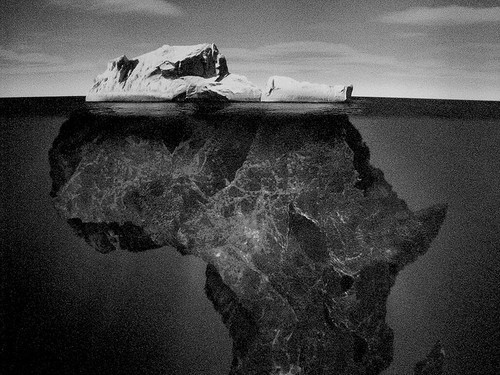 All over the media, we heard about Tunisia first, then the Egyptian Revolution, then the Libyan one, and so on. But this gave us, viewers, an illusion of succession of one crisis following the other. Expressions such as "domino effect" (an old Cold War word) only served to reinforce this feeling. Worse, it created an effect of the type "tree hiding the forest". Indeed, while these countries were making the front pages and prime-time news, several other were doing just the same in complete indifference.
Some Africans in Ivory Coast rightfully took umbrage, and tweeted a CNN journalist until he relented. But beyond the odd and fun news like this (although how fun is it when dozens of people are slaughtered in the mean time?), the fact is that we keep ignoring the forest of unrest on several continents. To avoid this, I have tried to gather a simple list of them. I'll try to update it as it goes. Let's call this the "Extended Revolutions", in no particular order.
Dear readers,
It is a weakness of traditional media and particularly TV stations to select and filter information in a way which will hold in a traditional 25 minutes news bulletin. Unfortunately, this means that most channels and even newspapers will simply let some important pieces fall from the prime time news. This get even worse when there is abundance of events. No time was a better example of this than the last few weeks.
Some Africans in Ivory Coast rightfully took umbrage, and tweeted a CNN journalist until he relented. But beyond the odd and fun news like this (although how fun is it when dozens of people are slaughtered in the mean time?), the fact is that we keep ignoring the forest of unrest on several continents. To avoid this, I have tried to gather a simple list of them. I'll try to update it as it goes. Let's call this the "Extended Revolutions", in no particular order.
- Tunisia (after all, they were the spark in the powder keg).
- Ivory Coast (although chronologically before Tunisia, it did not have the same international effect)
- Egypt
- Gabon
- Cameroon
- Iran
- Lebanon
- Armenia
- China (although it took the form of a weird joke)
- Azerbaijan
- Libya
- Algeria
- Morocco
- Jordan
- Yemen
- Bahrain
- Oman
- Mauritania
- Djibouti
- Saudi Arabia
- Iraq
- Angola (unsure of this one)
22 February 2011
Europe and the Middle-East revolution
Dear readers,
After this very long pause in writing, I have been motivated by the Middle-East revolutions to put out this new piece. The main reason was my total disgust feeling when watching the reaction of European institutions and European countries to the insurrection.
I am not going to elaborate too much, but suffice to say that these reactions have varied from worried indifference to the most abject collaboration with the tyrants. I am no stranger to realpolitik and I am well aware that international politics aren't based on good feelings and kindness. Nevertheless, I think that it is the sign of a good statesman (or woman) to be able to recognize the momentum of History and at the very least to be able to capitalize on it. Our dear leaders have unfortunately shown nothing of this.
 When Tunisia went into full revolutionary mode, the French government proposed to help the Tunisian dictatorship with crowd containment know-how and technology. When Egypt took the street, the only comments from German or Dutch elites was that the risk of the Muslim Brotherhood taking over was too big. It could have been a threat to... Israel. I am no Islamophile, but, let's face it, the complacency of the EU and Egypt towards Israel's apartheid policy has only made the Middle-East problems worst, not better. When Bahreini decided that they had enough, the only comment from our "lesson givers" was: beware of the pro-Iranian Shia majority. Now that Algeria and Lybia are in trouble, Berlusconi, Frattini and Schwarzenberg went very publicly on the record to express their support to Gaddafi. They were obviously terrified of a massive influx of refugees. Maltese authority were more discrete (at least they had some decency) but no less worried in their warning.
Unfortunately for all these despicable EU politicians, Bouteflika in Algeria and Gaddafi in Lybia decided to handle the matter the hard way. Algerian "security forces" (i.e. goons) simply beat up demonstrators into submission. Gaddafi forces went simply berserk on the people, shooting indiscriminately into the crowds with heavy weapons, sending its Air Force against rebelling cities and sniping people from the roofs. When Army and Air Force units refused to shoot at their own people, he used Ukrainian pilots and African mercenaries. Both are cheap and don't ask questions. The graphic videos and pictures filtering through the Lybian media shutdown are explicit enough: streets are littered with body parts and rubble. Hospitals are crowded, when they are not bombarded themselves.
One would expect from our dear politicians that they would at the very least resign. Don't hold your breath, though, that is not going to happen. Schwarzenberg (Czech Republic) was ashamed enough to say that his words had been taken out of context. In my opinion, the only lack of context (and his only excuse) was that he did not know the extent of the slaughter at the time. Anyway, honor and justice would require from them to politically fall on their swords, so to speak. That is not going to happen, so I won't hesitate: people of Europe, wake up! Demand the immediate resignation of all the politicians who knowingly lent a hand to the Maghreb tyrants (or still do so). Honestly, it won't be a big loss for Europe... And if they do not resign, let's take the street. After all, why would we always arrogantly pose ourselves in model to the Arab world? We can learn so much from it too.
After this very long pause in writing, I have been motivated by the Middle-East revolutions to put out this new piece. The main reason was my total disgust feeling when watching the reaction of European institutions and European countries to the insurrection.
I am not going to elaborate too much, but suffice to say that these reactions have varied from worried indifference to the most abject collaboration with the tyrants. I am no stranger to realpolitik and I am well aware that international politics aren't based on good feelings and kindness. Nevertheless, I think that it is the sign of a good statesman (or woman) to be able to recognize the momentum of History and at the very least to be able to capitalize on it. Our dear leaders have unfortunately shown nothing of this.

Unfortunately for all these despicable EU politicians, Bouteflika in Algeria and Gaddafi in Lybia decided to handle the matter the hard way. Algerian "security forces" (i.e. goons) simply beat up demonstrators into submission. Gaddafi forces went simply berserk on the people, shooting indiscriminately into the crowds with heavy weapons, sending its Air Force against rebelling cities and sniping people from the roofs. When Army and Air Force units refused to shoot at their own people, he used Ukrainian pilots and African mercenaries. Both are cheap and don't ask questions. The graphic videos and pictures filtering through the Lybian media shutdown are explicit enough: streets are littered with body parts and rubble. Hospitals are crowded, when they are not bombarded themselves.
One would expect from our dear politicians that they would at the very least resign. Don't hold your breath, though, that is not going to happen. Schwarzenberg (Czech Republic) was ashamed enough to say that his words had been taken out of context. In my opinion, the only lack of context (and his only excuse) was that he did not know the extent of the slaughter at the time. Anyway, honor and justice would require from them to politically fall on their swords, so to speak. That is not going to happen, so I won't hesitate: people of Europe, wake up! Demand the immediate resignation of all the politicians who knowingly lent a hand to the Maghreb tyrants (or still do so). Honestly, it won't be a big loss for Europe... And if they do not resign, let's take the street. After all, why would we always arrogantly pose ourselves in model to the Arab world? We can learn so much from it too.
23 April 2010
Denuclearization
Dear readers,
The BBC reports that Anders Fogh Rasmussen, NATO's chief, declared that NATO should retain nuclear capacities as long as there would be rogue regimes and terrorists threatening the Alliance. He added that such threats also made a serious anti-missile defense system all the more important.
While I completely agree with mister Rasmussen's second statement, the first one is, to say the least, debatable. The Danish former Minister is well aware of one of the reasons for this, the economic one. He addressed it in his comment, by mentioning that NATO should find a way of mutualizing the costs of such "deterrents". Denmark is indeed a member of NATO, and pays for its own expenses within the Alliance. However, very much like the Netherlands and most other NATO members (apart from France, the UK and the USA), Denmark enjoys the protection of the nuclear weapons of the three members who operates them, but without supporting any of the costs.
However, there is another reason to find mister Rasmussen comment slightly aloof. And it is the rational behind the deterrence issue. It is not very clear that nuclear weapons really were any deterrent at all, at least since the Cuban missile crisis. It is fairly obvious that even at the end of the Cold War, none of the sides was actually ready to use its nukes in a first strike against its opponent. A deterrent was thus unnecessary. Now that the Cold War is over, most states owning nukes are even less likely to use them. More importantly, Rasmussen is actually not referring to such states, but to "rogue countries and terrorist organisations". And that's where the logic is flawed. Rogue regimes and terrorist organisations are totally uninterested in deterrence. Terrorists can not be stopped or deterred by nukes. They are ready to die and bring as many people in death with them. They simply don't care about the possibility of a nuclear answer to their threat. Actually, they would very much enjoy it. Getting more civilian people killed in the bombing is simply bonus for them and their cause.
As for rogue states, it is maybe slightly more ambivalent. But who does mister Rasmussen mean by these? Well, it's quite obvious. He means the two who are openly hostile to NATO: Iran and North Korea. One could also argue about China and Pakistan, but these two countries are not more likely to use nukes in a first strike against NATO than the USSR was at the end of the Cold War. So what about Iran and North Korea? Well, I dare say that the deterrence of our own nukes against these regimes is near to zero. These are secretive and violent regimes which routinely kill, torture, persecute and oppress their own citizens. These are leaders who live under high protection, with deep bunkers ready to shelter them in case of an attack. They are very well aware that any strike (first or second) against them with NATO nukes would only hurt the very people the NATO cares about: their civilian population. In case of an attack, these leaders would of course already be in deep shelters, well protected against nuclear missiles.
 If they would threaten NATO, nukes would certainly not be the answer to the threat they pose. So mister Rasmussen, don't bother about the cost of NATO nukes. These costs could be much better used in the building of a common missile defence system. This is actually the only good idea that ever came from the former US Bush administration. NATO should stick to it and spend its money where it is really needed: in protecting its citizens against bombs, not in threatening other civilians with its own.
The BBC reports that Anders Fogh Rasmussen, NATO's chief, declared that NATO should retain nuclear capacities as long as there would be rogue regimes and terrorists threatening the Alliance. He added that such threats also made a serious anti-missile defense system all the more important.
While I completely agree with mister Rasmussen's second statement, the first one is, to say the least, debatable. The Danish former Minister is well aware of one of the reasons for this, the economic one. He addressed it in his comment, by mentioning that NATO should find a way of mutualizing the costs of such "deterrents". Denmark is indeed a member of NATO, and pays for its own expenses within the Alliance. However, very much like the Netherlands and most other NATO members (apart from France, the UK and the USA), Denmark enjoys the protection of the nuclear weapons of the three members who operates them, but without supporting any of the costs.
However, there is another reason to find mister Rasmussen comment slightly aloof. And it is the rational behind the deterrence issue. It is not very clear that nuclear weapons really were any deterrent at all, at least since the Cuban missile crisis. It is fairly obvious that even at the end of the Cold War, none of the sides was actually ready to use its nukes in a first strike against its opponent. A deterrent was thus unnecessary. Now that the Cold War is over, most states owning nukes are even less likely to use them. More importantly, Rasmussen is actually not referring to such states, but to "rogue countries and terrorist organisations". And that's where the logic is flawed. Rogue regimes and terrorist organisations are totally uninterested in deterrence. Terrorists can not be stopped or deterred by nukes. They are ready to die and bring as many people in death with them. They simply don't care about the possibility of a nuclear answer to their threat. Actually, they would very much enjoy it. Getting more civilian people killed in the bombing is simply bonus for them and their cause.
As for rogue states, it is maybe slightly more ambivalent. But who does mister Rasmussen mean by these? Well, it's quite obvious. He means the two who are openly hostile to NATO: Iran and North Korea. One could also argue about China and Pakistan, but these two countries are not more likely to use nukes in a first strike against NATO than the USSR was at the end of the Cold War. So what about Iran and North Korea? Well, I dare say that the deterrence of our own nukes against these regimes is near to zero. These are secretive and violent regimes which routinely kill, torture, persecute and oppress their own citizens. These are leaders who live under high protection, with deep bunkers ready to shelter them in case of an attack. They are very well aware that any strike (first or second) against them with NATO nukes would only hurt the very people the NATO cares about: their civilian population. In case of an attack, these leaders would of course already be in deep shelters, well protected against nuclear missiles.

21 January 2010
Blacksmiths of Lebanon offline?
Dear readers,
Looks like the website Blacksmiths of Lebanon has gone into hiding. Strangely, it is now an invitation only site. That sounds bizarre for te rather outspoken collective of Lebanese bloggers behind the site. If anyone has news about these gentlemen, please comment. I am actually a little bit worried.
Looks like the website Blacksmiths of Lebanon has gone into hiding. Strangely, it is now an invitation only site. That sounds bizarre for te rather outspoken collective of Lebanese bloggers behind the site. If anyone has news about these gentlemen, please comment. I am actually a little bit worried.
31 December 2009
2009 Review before 2010 wishes
Dear readers,
I have been a very bad blogger in 2009, inflicting only a couple of blog posts on you. I am very ashamed of this, so I decided to finish this year with something useful. So for all of you living in Rotterdam, Dutchies of Alochtones, here is a couple of tips from my 2009 experience to use in 2010 (and some shameful publicity for some friends of mine).
* Restaurant (classic): Met de Franse Slag. This classic French restaurant and café, on Schilderstraat 20, has a good chef and an excellent service for a very reasonable price (count 50 euros pp including wine for a three courses meal). The decor is also quite interesting, mixing jazzy and kitsch.
* Restaurant (exotic): Fugu is an excellent Japanese restaurant. Although not truely Japanese (there is no true Japanese restaurant in Rotterdam), it is the nearest to traditional Japanese cooking. The service is perfect and the location really nice, in the Wester Handelsterrein.
 * Gaming store (geeky): Gamers of the West is your international friendly card, board and miniature game shop, in the Jonker Fransstraat. Led by the energetic and welcoming West Givner (from Cleveland, Ohio), you will find there everything to play from Magic to Warhammer 40K, but also some rarer stuff, such as Infinity miniatures or my personal favourite: Legends of the Five Rings. The shop is big and West invites eveyone to play inside, so it is a very good atmosphere.
* Strip shop (general): Yendor. In the Korte Hoogstraat, it has cartoon novels, strips, mangas and some merchandising objects too. The staff is always helpful and has some old or rare stuff, on demand. Great service and great choice, although mostly (but not only) in Dutch.
* Computer shop: MyCom has good service, great advice and a very good content. On the Mariniersweg, it proposes pretty much everything, PC only, at excellent prices. Ordering online is possible, as well as home delivery.
I have been a very bad blogger in 2009, inflicting only a couple of blog posts on you. I am very ashamed of this, so I decided to finish this year with something useful. So for all of you living in Rotterdam, Dutchies of Alochtones, here is a couple of tips from my 2009 experience to use in 2010 (and some shameful publicity for some friends of mine).
* Restaurant (classic): Met de Franse Slag. This classic French restaurant and café, on Schilderstraat 20, has a good chef and an excellent service for a very reasonable price (count 50 euros pp including wine for a three courses meal). The decor is also quite interesting, mixing jazzy and kitsch.
* Restaurant (exotic): Fugu is an excellent Japanese restaurant. Although not truely Japanese (there is no true Japanese restaurant in Rotterdam), it is the nearest to traditional Japanese cooking. The service is perfect and the location really nice, in the Wester Handelsterrein.

* Strip shop (general): Yendor. In the Korte Hoogstraat, it has cartoon novels, strips, mangas and some merchandising objects too. The staff is always helpful and has some old or rare stuff, on demand. Great service and great choice, although mostly (but not only) in Dutch.
* Computer shop: MyCom has good service, great advice and a very good content. On the Mariniersweg, it proposes pretty much everything, PC only, at excellent prices. Ordering online is possible, as well as home delivery.
21 August 2009
Will we pluck the chicken or kill it?
Dear readers,
I have listened with disgust to many of the comments made in the UK and in the Netherlands about the so-called Icesave deal. This is a nasty piece of chauvinistic bullshit if there is one. Let's go back to the facts. In 2007 and 2008, many Dutch and British citizens (as well as most Icelandic people) subscribed to Landbanski saving accounts which were proposing extraordinary returns, far above the (then already quite high) market interest rates. Unfortunately for them, such rates could only be achieved through a semi-pyramidal scheme, part of the returns being funded by capital being invested by the new customers. Please note that each national group of citizens was also relying on guarantees from their respective national finance regulators. This lasted until the now infamous credit crisis burst, leaving thousands of people with virtually nothing left of their savings.
Obviously, these customers turned back to their state and activated the refund requests linked to the national guarantee. Some of them, however, had invested amounts in the Landbanski scheme that were higher than the national guarantee limit. They lost a lot of money, on top of the promised interests. Understandably, these citizens and the public organisations that had imitated them (regional councils, towns and other districts) were quite angry at the Icelandic banks for having failed them, despite the fact that they should probably have known better. There is indeed no such thing as a saving system which can deliver twice the market interest rate.
However, things became uglier. Hit by a triple bank failure (aggravated by the UK uncompromising attitude), the Icelandic currency lost most of its value and the Icelandic economy collapsed. Iceland new government and its citizens, understanding for the first time that their previous go-it-alone policy was not protecting them in times of crisis, decided to apply for EU membership. The reasoning is that the European Union, particularly its monetary aspects (the Euro), could protect them in the future from similar disasters. This was favourably seen by most EU member states (in normal times, Iceland would be a net contributor to the EU budget). But the UK and Netherlands, were both governments are in difficult electoral situations, facing strong populist criticisms, vocally requested that Iceland first reimburse the sums they had advanced themselves to their duped citizens. This is called the Icesave package deal and is currently being discussed by the Iceland Parliament, the Athling (the oldest Parliament in the world).
This is unfortunately probably going to derail the whole process. EU membership negotiations were already going to be difficult, due to a understandable worries from the Icelandic fishery sector. But the new British and Dutch exigences are enraging an already touchy Icelandic public opinion. And I can only give my support to the unfortunate Icelandic citizens. Why on Earth, when they are already down, highly indebted and suffering from a terrible crisis, should they be forced to support the costs of guarantees that were passed by other governments. Why should they pay for the misdeeds of a private bank which only happens to share a geographic situation with them. Why should they be asked to cover on their own money the risks taken by other people? Why should they in other words, pay for the greed of fellow Europeans? I see no ethical basis for this. I don't see any legal reason for this either. On the contrary, I believe that we should rather give a shoulder to fellow Europeans, especially at a time when everyone is suffering. That's what solidarity is for. That's what the EU is for: being stronger together, not screwing the weakest link...
I have listened with disgust to many of the comments made in the UK and in the Netherlands about the so-called Icesave deal. This is a nasty piece of chauvinistic bullshit if there is one. Let's go back to the facts. In 2007 and 2008, many Dutch and British citizens (as well as most Icelandic people) subscribed to Landbanski saving accounts which were proposing extraordinary returns, far above the (then already quite high) market interest rates. Unfortunately for them, such rates could only be achieved through a semi-pyramidal scheme, part of the returns being funded by capital being invested by the new customers. Please note that each national group of citizens was also relying on guarantees from their respective national finance regulators. This lasted until the now infamous credit crisis burst, leaving thousands of people with virtually nothing left of their savings.
Obviously, these customers turned back to their state and activated the refund requests linked to the national guarantee. Some of them, however, had invested amounts in the Landbanski scheme that were higher than the national guarantee limit. They lost a lot of money, on top of the promised interests. Understandably, these citizens and the public organisations that had imitated them (regional councils, towns and other districts) were quite angry at the Icelandic banks for having failed them, despite the fact that they should probably have known better. There is indeed no such thing as a saving system which can deliver twice the market interest rate.
However, things became uglier. Hit by a triple bank failure (aggravated by the UK uncompromising attitude), the Icelandic currency lost most of its value and the Icelandic economy collapsed. Iceland new government and its citizens, understanding for the first time that their previous go-it-alone policy was not protecting them in times of crisis, decided to apply for EU membership. The reasoning is that the European Union, particularly its monetary aspects (the Euro), could protect them in the future from similar disasters. This was favourably seen by most EU member states (in normal times, Iceland would be a net contributor to the EU budget). But the UK and Netherlands, were both governments are in difficult electoral situations, facing strong populist criticisms, vocally requested that Iceland first reimburse the sums they had advanced themselves to their duped citizens. This is called the Icesave package deal and is currently being discussed by the Iceland Parliament, the Athling (the oldest Parliament in the world).
This is unfortunately probably going to derail the whole process. EU membership negotiations were already going to be difficult, due to a understandable worries from the Icelandic fishery sector. But the new British and Dutch exigences are enraging an already touchy Icelandic public opinion. And I can only give my support to the unfortunate Icelandic citizens. Why on Earth, when they are already down, highly indebted and suffering from a terrible crisis, should they be forced to support the costs of guarantees that were passed by other governments. Why should they pay for the misdeeds of a private bank which only happens to share a geographic situation with them. Why should they be asked to cover on their own money the risks taken by other people? Why should they in other words, pay for the greed of fellow Europeans? I see no ethical basis for this. I don't see any legal reason for this either. On the contrary, I believe that we should rather give a shoulder to fellow Europeans, especially at a time when everyone is suffering. That's what solidarity is for. That's what the EU is for: being stronger together, not screwing the weakest link...
19 August 2009
Android Review
Dear readers,
As some of you might now, I got myself a new mobile phone while renewing my phone subscription. After long and careful consideration about which phone was on offer by my provider, as well as my own budget (which is as usual on the tight side), I decided to go for the much touted HTC G2 "Hero". The important thing about this phone is not just the specifications, but the operating system.
The HTC Hero makes full use of the latest version of Google's Android OS, dubbed Cupcake (a Linux related operating system for mobile and smart phones). It does so via its own HTC Sense interface which is basically an integration of Android to the HTC Hero. Before going any further in this review, let me state a couple of points first: I am a Google fan in many ways (although I don't like everything they do) and I enjoy gadgets of all types very much. All in all, I am extremely happy with the HTC acquisition and I plan to keep it for a good while. This said, I am also going to bitch a bit about what I don't like in both, so get ready.
First, let's have a look at the goodies (and there is a whole lot of them).
The phone is big, without being heavy (135 grams) or unhandy. It has a kind of bended shape at the bottom, which is not unpleasant and makes it feel like an actual phone, not just another IPhone copy. The screen is rectangular, with an 81 mm (3.2 inches) diagonal and a fairly standard 480 * 320 pixels resolution. The brightness is good and makes it easy to read even without the backlight option on, unless in bright sun light, of course. There is a mini-mouse ball for navigation, six buttons and no keyboard. Input is done via the touchscreen. The only plugs are a semi standard USB 2 and a headphone jack. A 5 Mega pixel video camera is included, as well as a slot for mini HD SD memory card (filled with a 2 Gigabytes one). I immediately replaced the SD card by an 8 G one, because I was planning to listen to music on this new toy. ;-)
All in all, I have used this phone for four days now, and it feels great. As a phone it is doing its job nicely, calling and receiving calls is going fine and the sound is crisp. Messaging is also quite handy and the OS shines already at this stage with its integrated way of guessing words for you as you type, but without imposing a solution on you (assuming you are typing in the language you indicated in the settings). I mention both of these because in these days of smart phones, people and especially salesmen tend to forget that a mobile is primarily this: a bloody telephone. As another side comment, I should also add that the battery life is really good. I was a bit afraid of this in the first place, but I was happily surprised. Despite using the phone intensively (including some of the most power intensive options I am going to mention later), the battery lasts easily a full work day and more. This means you can load your phone during night or in the morning, go to work with it and use it a lot, come back home, continue using it and only have to put it on the (USB type plug) loader at night again or the morning after. This is a major plus point, I think.
The applications and the OS are also a blast. The camera works fine and uses a second or two delay as default, which is handy in most situations where one might want to use a phone camera. The video is ok too, but this is not the most interesting use of the HTC Hero lenses in any way... The interface uses finger gliding/tapping or the mouse ball. Both work very well, although I have to say that my greasy fingers are not really helping on the touchscreen. Tapping to type is going well, as I already mentioned. The Android "desktop" functions pretty much as one virtual scrolling screen made of seven times the actual HTC screen. The central panel is linked to the home button and shows the WiFi switch, the Browser the Mail application, the Contact list, the SMS launcher and an analog watch per default. There are also three virtual buttons in the lower bar (the application list, the phone mode and the "add icon or widget" button). The higher bar is a status one, which can be expended, and proves highly useful to open incoming messages, alerts and other notifications directly.
Other panels show a couple of other icons and widgets (weather forecast for your location, web search, camera and music). I have to say something about the music listener application. The way it works is really the most user friendly you can imagine. To load music on the phone: just plug the HTC on a USB port on your PC (it will use this to reload too, by the way) and use copy paste from a PC window to the HTC window. Once the transfer has occurred, unplug the phone and voilà: the music is found, recognized, sorted by meta tags and ready to play. All basic options are there: play lists, shuffle, repeat and so on. The sound is excellent and the provided headphones are of decent quality. Volume can be changed via the phone side button reserved to this use. A remote on the headphones allows the following actions: play or stop/pause, forward and backward.
Of course, maybe the most interesting aspect of Android is the number of applications you can download from the "Market" to the phone and use almost immediately. Thanks to Google's open policy, these are mostly free (although many of them are not, ranging from 1 to 5 or 6 Euros, there is pretty much two free equivalent for each paying one). They cover all kinds of software and uses, from the obvious productivity applications to the silliest games or "social networking" fads.
Speaking about fashion, the latest and maybe most impressive type of application available on the Android market are the ones called "augmented reality". Some predict this will be the new step beyond Web 2.0. I honestly don't know, but it certainly looks cool. There are two major applications in this range (and only available on Android, as far as I know): Layar, a Dutch system, and Austrian made Wikitude. There used to be a Japanese one, but it seems to not have survived the recent credit crisis. What do they do? Well, they make use of the GPS receiver, the accelerometer and the video camera or the HTC Hero to actually display layers of web based information directly on the live video images of your surroundings displayed by the camera. The best comparison I have seen to described this is the images taken in the movie Terminator, when the spectator gets to peek from the Terminator point of view. They don't see only the video image of what the robot perceives, but also all kinds of (con)textual information about its targets and environment. Augmented reality applications do exactly that. Most use a simple search for geolocated elements on the web (such as Wikipedia locations, Google map searches and so on). But, as demonstrated by Layar, any provider of such layers can have its specific information displayed on their software platform (presumably via their own API).
Now let's have a look at the bad sides.
The first negative, although it is a minor thing, is the fact that the screen is only 3.2 inches, instead of the massive 3.5 showed by the IPhone. It might not be much, but it is visible and not irrelevant in terms of reading comfort. This said, it has a positive side as it is easier to hold than the Apple product, especially for someone like me with less than average size hands. Still in the usability issues, the volume button that I mentioned above is not so obvious to use and a bit poorly designed. But again, no big deal and more a matter of getting used to it.
There are more annoyances on the software side, unfortunately. Again, please remember that most of this if not all comes for free, so it is a bit like complaining about a present somebody made to you... But still, for the sake of software improvement, it needs to be said. First, and at least for my provider, Skype is not allowed to function with Voice over IP via the WiFi. I can understand the economic rational behind this, but it made me a sad panda. ;-)
The second and probably most annoying issue is the browser. It is full of bugs in my opinion. I know it is based on a much acclaimed system (which is also used on the IPhone), but still I hate it. Despite claims of the contrary in the settings, I can't have the home page stick at all. Cache refreshing happens when it wants (pretty much never), which makes AJAX software nearly unusable. I see that there are other browsers available on the Android Market, and I certainly intend to test them. At the moment and the way it is designed, the default one is sub par. Another bad thing with it is that the button you normally use to close an application (the left arrow) is also the "Go back" button in the browser. I haven't find a decent way of going around this. Frankly, this is poor design.
A thing I also found annoying in Android is that, despite the fact the software is a Google based product, Google applications are not supported that well. Of course, Gmail and Google Calendar are standard, as well as YouTube and Google Map (which makes great use of the GPS) and you can add easily Google Finance and a couple of others. But I find unfortunate that Google Reader has no dedicated application nor a widget and that there is no free application allowing to synchronize your Google To-Do List. I couldn't find anything to synchronize bookmarks either, but i haven't researched the issue in details either. I eventually settled for the free and excellent NewsRob application which integrates very well with Google Reader and I am using the pretty good Astrid app for the To-Do List (although it does not synchronize with Google To-Do list on iGoogle). And I know that I could use both these applications through the browser. But after what I said about the standard browser, I guess you will understand why I refuse to do so (and why it wouldn't work too well, considering the caching issues). Also, using the browser involves at least one or two extra clicks or taps and I think there is no best way to kill user friendliness.
Last but not least, Picasa is poorly supported. Although it is supposed to natively integrate with the Android Albums photo library, this is not easy to find out and even worse executed. I could not make it work at all, for some reason, and I ended up canceling the picture upload. Strangely enough, Facebook and Flickr uploads are also natively supported and work better... 8-\
Apart from these glitches and minor annoyances, I would conclude this (too) long review by saying that the HTC Hero with Android and HTC Sense is a great smart phone with a fantastic piece of software running on it. And I haven't tried all of it yet, by far... So I would highly recommend it. And for the budget conscious like me, I would even go as far as saying that it is superior to the Apple IPhone.
As some of you might now, I got myself a new mobile phone while renewing my phone subscription. After long and careful consideration about which phone was on offer by my provider, as well as my own budget (which is as usual on the tight side), I decided to go for the much touted HTC G2 "Hero". The important thing about this phone is not just the specifications, but the operating system.
The HTC Hero makes full use of the latest version of Google's Android OS, dubbed Cupcake (a Linux related operating system for mobile and smart phones). It does so via its own HTC Sense interface which is basically an integration of Android to the HTC Hero. Before going any further in this review, let me state a couple of points first: I am a Google fan in many ways (although I don't like everything they do) and I enjoy gadgets of all types very much. All in all, I am extremely happy with the HTC acquisition and I plan to keep it for a good while. This said, I am also going to bitch a bit about what I don't like in both, so get ready.
First, let's have a look at the goodies (and there is a whole lot of them).
The phone is big, without being heavy (135 grams) or unhandy. It has a kind of bended shape at the bottom, which is not unpleasant and makes it feel like an actual phone, not just another IPhone copy. The screen is rectangular, with an 81 mm (3.2 inches) diagonal and a fairly standard 480 * 320 pixels resolution. The brightness is good and makes it easy to read even without the backlight option on, unless in bright sun light, of course. There is a mini-mouse ball for navigation, six buttons and no keyboard. Input is done via the touchscreen. The only plugs are a semi standard USB 2 and a headphone jack. A 5 Mega pixel video camera is included, as well as a slot for mini HD SD memory card (filled with a 2 Gigabytes one). I immediately replaced the SD card by an 8 G one, because I was planning to listen to music on this new toy. ;-)
All in all, I have used this phone for four days now, and it feels great. As a phone it is doing its job nicely, calling and receiving calls is going fine and the sound is crisp. Messaging is also quite handy and the OS shines already at this stage with its integrated way of guessing words for you as you type, but without imposing a solution on you (assuming you are typing in the language you indicated in the settings). I mention both of these because in these days of smart phones, people and especially salesmen tend to forget that a mobile is primarily this: a bloody telephone. As another side comment, I should also add that the battery life is really good. I was a bit afraid of this in the first place, but I was happily surprised. Despite using the phone intensively (including some of the most power intensive options I am going to mention later), the battery lasts easily a full work day and more. This means you can load your phone during night or in the morning, go to work with it and use it a lot, come back home, continue using it and only have to put it on the (USB type plug) loader at night again or the morning after. This is a major plus point, I think.
The applications and the OS are also a blast. The camera works fine and uses a second or two delay as default, which is handy in most situations where one might want to use a phone camera. The video is ok too, but this is not the most interesting use of the HTC Hero lenses in any way... The interface uses finger gliding/tapping or the mouse ball. Both work very well, although I have to say that my greasy fingers are not really helping on the touchscreen. Tapping to type is going well, as I already mentioned. The Android "desktop" functions pretty much as one virtual scrolling screen made of seven times the actual HTC screen. The central panel is linked to the home button and shows the WiFi switch, the Browser the Mail application, the Contact list, the SMS launcher and an analog watch per default. There are also three virtual buttons in the lower bar (the application list, the phone mode and the "add icon or widget" button). The higher bar is a status one, which can be expended, and proves highly useful to open incoming messages, alerts and other notifications directly.
Other panels show a couple of other icons and widgets (weather forecast for your location, web search, camera and music). I have to say something about the music listener application. The way it works is really the most user friendly you can imagine. To load music on the phone: just plug the HTC on a USB port on your PC (it will use this to reload too, by the way) and use copy paste from a PC window to the HTC window. Once the transfer has occurred, unplug the phone and voilà: the music is found, recognized, sorted by meta tags and ready to play. All basic options are there: play lists, shuffle, repeat and so on. The sound is excellent and the provided headphones are of decent quality. Volume can be changed via the phone side button reserved to this use. A remote on the headphones allows the following actions: play or stop/pause, forward and backward.
Of course, maybe the most interesting aspect of Android is the number of applications you can download from the "Market" to the phone and use almost immediately. Thanks to Google's open policy, these are mostly free (although many of them are not, ranging from 1 to 5 or 6 Euros, there is pretty much two free equivalent for each paying one). They cover all kinds of software and uses, from the obvious productivity applications to the silliest games or "social networking" fads.
Speaking about fashion, the latest and maybe most impressive type of application available on the Android market are the ones called "augmented reality". Some predict this will be the new step beyond Web 2.0. I honestly don't know, but it certainly looks cool. There are two major applications in this range (and only available on Android, as far as I know): Layar, a Dutch system, and Austrian made Wikitude. There used to be a Japanese one, but it seems to not have survived the recent credit crisis. What do they do? Well, they make use of the GPS receiver, the accelerometer and the video camera or the HTC Hero to actually display layers of web based information directly on the live video images of your surroundings displayed by the camera. The best comparison I have seen to described this is the images taken in the movie Terminator, when the spectator gets to peek from the Terminator point of view. They don't see only the video image of what the robot perceives, but also all kinds of (con)textual information about its targets and environment. Augmented reality applications do exactly that. Most use a simple search for geolocated elements on the web (such as Wikipedia locations, Google map searches and so on). But, as demonstrated by Layar, any provider of such layers can have its specific information displayed on their software platform (presumably via their own API).
Now let's have a look at the bad sides.
The first negative, although it is a minor thing, is the fact that the screen is only 3.2 inches, instead of the massive 3.5 showed by the IPhone. It might not be much, but it is visible and not irrelevant in terms of reading comfort. This said, it has a positive side as it is easier to hold than the Apple product, especially for someone like me with less than average size hands. Still in the usability issues, the volume button that I mentioned above is not so obvious to use and a bit poorly designed. But again, no big deal and more a matter of getting used to it.
There are more annoyances on the software side, unfortunately. Again, please remember that most of this if not all comes for free, so it is a bit like complaining about a present somebody made to you... But still, for the sake of software improvement, it needs to be said. First, and at least for my provider, Skype is not allowed to function with Voice over IP via the WiFi. I can understand the economic rational behind this, but it made me a sad panda. ;-)
The second and probably most annoying issue is the browser. It is full of bugs in my opinion. I know it is based on a much acclaimed system (which is also used on the IPhone), but still I hate it. Despite claims of the contrary in the settings, I can't have the home page stick at all. Cache refreshing happens when it wants (pretty much never), which makes AJAX software nearly unusable. I see that there are other browsers available on the Android Market, and I certainly intend to test them. At the moment and the way it is designed, the default one is sub par. Another bad thing with it is that the button you normally use to close an application (the left arrow) is also the "Go back" button in the browser. I haven't find a decent way of going around this. Frankly, this is poor design.
A thing I also found annoying in Android is that, despite the fact the software is a Google based product, Google applications are not supported that well. Of course, Gmail and Google Calendar are standard, as well as YouTube and Google Map (which makes great use of the GPS) and you can add easily Google Finance and a couple of others. But I find unfortunate that Google Reader has no dedicated application nor a widget and that there is no free application allowing to synchronize your Google To-Do List. I couldn't find anything to synchronize bookmarks either, but i haven't researched the issue in details either. I eventually settled for the free and excellent NewsRob application which integrates very well with Google Reader and I am using the pretty good Astrid app for the To-Do List (although it does not synchronize with Google To-Do list on iGoogle). And I know that I could use both these applications through the browser. But after what I said about the standard browser, I guess you will understand why I refuse to do so (and why it wouldn't work too well, considering the caching issues). Also, using the browser involves at least one or two extra clicks or taps and I think there is no best way to kill user friendliness.
Last but not least, Picasa is poorly supported. Although it is supposed to natively integrate with the Android Albums photo library, this is not easy to find out and even worse executed. I could not make it work at all, for some reason, and I ended up canceling the picture upload. Strangely enough, Facebook and Flickr uploads are also natively supported and work better... 8-\
Apart from these glitches and minor annoyances, I would conclude this (too) long review by saying that the HTC Hero with Android and HTC Sense is a great smart phone with a fantastic piece of software running on it. And I haven't tried all of it yet, by far... So I would highly recommend it. And for the budget conscious like me, I would even go as far as saying that it is superior to the Apple IPhone.
17 August 2009
There Is Honor Amongst Thieves
Dear readers,
I read this morning that Mikhail Khodorovski has refused to request the pardon of Dimitri Medvedev, as hinted by the current Russian President. Khodorovski is doing an 8 year jail term in Russia for alleged tax evasion and he is being currently tried for a second set of fraud and embezzlement accusations. This second set is just as likely to end up in a conviction and a maximum 20 year cumulative sentence, considering the level of independence of the Russian justice system.
So why would a (relatively) young man like Khodorovski refuse to ask for a pardon which could prevent him for spending most of his life in a Russian dungeon? The risks of doing so are minimal, considering he will be convicted anyway. And Medvedev would have never hinted at it if he was not intending to give such a pardon, at least after a while. Well, Khodorovski himself gave the answer: to ask for a pardon in Russia, like in most other countries, you need to recognize that you were guilty in the first place. There is no way Mikhail Khodorovski will do this any time soon. While the ex-tycoon is certainly no saint and probably did commit some of the infractions he is accused of (and maybe some others), there is also no illusion for anyone that these convictions are purely motivated by the wish of the Putin Clan to rule Russia unopposed.
This has been Khodorovski leitmotiv for the last four or five years and he is unlikely to change his speech. Because that's pretty much all he has left. He lost his freedom when he was arrested then, all his fortune disappeared in the trial or was confiscated by the Russian authorities or distributed as spoils to Russian companies nearer to the Kremlin. All he has left, apart from his life, is his "honor". Likely a thief honor, after all, but honor nonetheless. And in a society such as Russia, this still counts. It is his name, after all. The other thieves are giving him the opportunity to exchange his honor against his life (because he won't ever be free, even out of jail, they will see to that). And he refused.
So here I am, saluting a true man who refuses to bend. Good luck Mikhail. You will need a lot of it.
I read this morning that Mikhail Khodorovski has refused to request the pardon of Dimitri Medvedev, as hinted by the current Russian President. Khodorovski is doing an 8 year jail term in Russia for alleged tax evasion and he is being currently tried for a second set of fraud and embezzlement accusations. This second set is just as likely to end up in a conviction and a maximum 20 year cumulative sentence, considering the level of independence of the Russian justice system.
So why would a (relatively) young man like Khodorovski refuse to ask for a pardon which could prevent him for spending most of his life in a Russian dungeon? The risks of doing so are minimal, considering he will be convicted anyway. And Medvedev would have never hinted at it if he was not intending to give such a pardon, at least after a while. Well, Khodorovski himself gave the answer: to ask for a pardon in Russia, like in most other countries, you need to recognize that you were guilty in the first place. There is no way Mikhail Khodorovski will do this any time soon. While the ex-tycoon is certainly no saint and probably did commit some of the infractions he is accused of (and maybe some others), there is also no illusion for anyone that these convictions are purely motivated by the wish of the Putin Clan to rule Russia unopposed.
This has been Khodorovski leitmotiv for the last four or five years and he is unlikely to change his speech. Because that's pretty much all he has left. He lost his freedom when he was arrested then, all his fortune disappeared in the trial or was confiscated by the Russian authorities or distributed as spoils to Russian companies nearer to the Kremlin. All he has left, apart from his life, is his "honor". Likely a thief honor, after all, but honor nonetheless. And in a society such as Russia, this still counts. It is his name, after all. The other thieves are giving him the opportunity to exchange his honor against his life (because he won't ever be free, even out of jail, they will see to that). And he refused.
So here I am, saluting a true man who refuses to bend. Good luck Mikhail. You will need a lot of it.
21 July 2009
Sarkozy Speech in Le Havre
Dear readers,
As you are probably aware of, if you have followed this blog from the beginning (poor you), I am interested in maritime transport, from a professional point of view. I have worked in various positions for maritime companies or suppliers and I am still currently employed by a container shipping line.
So I had quite some expectations about the much touted new French policy regarding the sea and especially ports. This has been engaged quite massively since Nicolas Sarkozy became President (although in all honesty, his predecessor, Jacques Chirac, had largely began in the same direction). Anyway, last week, during a visit to Le Havre harbor, Nicolas Sarkozy made a rather long speech summarizing the efforts already engaged and defining priorities and concrete actions for the future. As you can imagine, I read it with attention.
First, I'd like to say that I never was a fan of Mister Sarkozy. I didn't vote for him in the last elections and I have no particular sympathy for him neither for his party. He is in general way too conservative for me, focusing largely on security rather than justice, business rather than people and image rather than content. However, I always decided to keep an open mind regarding specific policies, and give him the benefit of the doubt. I have to admit that I have been rather well surprised by this Le Havre speech. As a note, please remember that this policy (apart from a tangential exception) left aside anything related to the French Navy and defense in general. Such topics have been touched in other speeches and documents, unfortunately not to my liking either.
But for the port policy, I must say, Mister Sarkozy had it right. After a short descriptive of the current state of affairs (abysmal, as everyone in the field knows), the French President noted that France has a massive maritime potential, be it for trade (ports, shipping lines, shipping routes and other intermodal potential) fish resources, mineral resources and of course energy and science. He also noted that such a potential was either unexploited, poorly exploited or (in the case of fisheries) exploited in an unsustainable way. This is something that has been said by specialists and scientists for about twenty years, but I have to remind the reader that it is the absolute first time, to my knowledge, that it is admitted at such a high level in France.
So what about the solutions. Well, and that's where it becomes interesting, Mister Sarkozy went in quite some details... at least apparently. First he noted that Paris had to be better linked to Le Havre (its natural entry port) and that a TGV (high speed train) would be build for this. This annoyed me prodigiously. Of course, a TGV is a nice piece of technology. However, most of the needed traffic between Le Havre and Paris is merchandise (oil, ores and mostly containers). Adding a TGV will only make the merchandise traffic more difficult by increasing congestion on the line. But the next paragraph re-insured me a bit: Sarkozy asks indeed for a dedicated merchandise rail link too, and practically ordered RFF (the rail infrastructure company in France) to stop canceling merchandise slots already reserved for freight trains. This is a major new policy in France and could do a lot to change the way freight is moved in the country. At the moment, France relies massively on trucks for transports, which is congesting the roads, polluting the environment and economically stupid.
Nicolas Sarkozy went further on the port policy which is now largely engaged. Le Havre had just finished its negotiations on port reforms (and most French ports already did so in the past months), largely transferring the crane operations and ownership to private operators, as is done in most efficient ports around the world. This much needed privatization will hopefully help improve the disastrous competitive position of French ports. Despite their advantageous location in Europe, on the Asia route, Marseille, Le Havre and Dunkirk all together are not even reaching the level of traffic of ports like Antwerp or Hamburg (not even mentioning Rotterdam, which is a league of its own). This ridiculous situation is largely due to poor public infrastructure, a culture of social conflict and the absence of decent hinterland links to serve other countries via France. But it is also the symptom of a lack of interest in France for its ports and the maritime world in general. This seems to have changed with Jacques Chirac a bit (maybe via his personal links with CMA CGM and Perrigault) but took a new dimension with Sarkozy.
To my surprise, he even mentioned inter-modality, container traffic, train issues, port comparisons, trade routes and so on. Obviously, someone briefed him extensively and successfully on the question. I hope this is more than just words and will translate in actual policies and investments. I wouldn't hold my breath too much though. The "little Nicolas", as he is sometimes dubbed by comics, is used to big media appearances followed by very little or no realizations. But again, I want to give him the benefit of the doubt.
Interestingly enough (and in a domain where I am much less proficient, I am afraid), he mentioned other aspects of maritime policies that are new. For the first time, he refused to blindly defend French and European fisheries and claimed that conservation and exploitation of the sea should be based on sound scientific studies and not local politics (something never done by his predecessors). This is a major switch in France and might foresee other ones... maybe even for the absurd French agricultural policy imposed upon the European Union? One can dream. Sarkozy took a similar approach towards the use of the sea for mineral and energy production. Coming from such a pro-business politician, this was a surprisingly "green" speech.
All in all, if only two of the four main proposal he discussed are actually implemented, this would be enough for me to swallow my opposition to Nicolas Sarkozy. I might not like him, but I would be glad if he at last does something where so many before him never even got informed on the topic.
As you are probably aware of, if you have followed this blog from the beginning (poor you), I am interested in maritime transport, from a professional point of view. I have worked in various positions for maritime companies or suppliers and I am still currently employed by a container shipping line.
So I had quite some expectations about the much touted new French policy regarding the sea and especially ports. This has been engaged quite massively since Nicolas Sarkozy became President (although in all honesty, his predecessor, Jacques Chirac, had largely began in the same direction). Anyway, last week, during a visit to Le Havre harbor, Nicolas Sarkozy made a rather long speech summarizing the efforts already engaged and defining priorities and concrete actions for the future. As you can imagine, I read it with attention.
First, I'd like to say that I never was a fan of Mister Sarkozy. I didn't vote for him in the last elections and I have no particular sympathy for him neither for his party. He is in general way too conservative for me, focusing largely on security rather than justice, business rather than people and image rather than content. However, I always decided to keep an open mind regarding specific policies, and give him the benefit of the doubt. I have to admit that I have been rather well surprised by this Le Havre speech. As a note, please remember that this policy (apart from a tangential exception) left aside anything related to the French Navy and defense in general. Such topics have been touched in other speeches and documents, unfortunately not to my liking either.
But for the port policy, I must say, Mister Sarkozy had it right. After a short descriptive of the current state of affairs (abysmal, as everyone in the field knows), the French President noted that France has a massive maritime potential, be it for trade (ports, shipping lines, shipping routes and other intermodal potential) fish resources, mineral resources and of course energy and science. He also noted that such a potential was either unexploited, poorly exploited or (in the case of fisheries) exploited in an unsustainable way. This is something that has been said by specialists and scientists for about twenty years, but I have to remind the reader that it is the absolute first time, to my knowledge, that it is admitted at such a high level in France.
So what about the solutions. Well, and that's where it becomes interesting, Mister Sarkozy went in quite some details... at least apparently. First he noted that Paris had to be better linked to Le Havre (its natural entry port) and that a TGV (high speed train) would be build for this. This annoyed me prodigiously. Of course, a TGV is a nice piece of technology. However, most of the needed traffic between Le Havre and Paris is merchandise (oil, ores and mostly containers). Adding a TGV will only make the merchandise traffic more difficult by increasing congestion on the line. But the next paragraph re-insured me a bit: Sarkozy asks indeed for a dedicated merchandise rail link too, and practically ordered RFF (the rail infrastructure company in France) to stop canceling merchandise slots already reserved for freight trains. This is a major new policy in France and could do a lot to change the way freight is moved in the country. At the moment, France relies massively on trucks for transports, which is congesting the roads, polluting the environment and economically stupid.
Nicolas Sarkozy went further on the port policy which is now largely engaged. Le Havre had just finished its negotiations on port reforms (and most French ports already did so in the past months), largely transferring the crane operations and ownership to private operators, as is done in most efficient ports around the world. This much needed privatization will hopefully help improve the disastrous competitive position of French ports. Despite their advantageous location in Europe, on the Asia route, Marseille, Le Havre and Dunkirk all together are not even reaching the level of traffic of ports like Antwerp or Hamburg (not even mentioning Rotterdam, which is a league of its own). This ridiculous situation is largely due to poor public infrastructure, a culture of social conflict and the absence of decent hinterland links to serve other countries via France. But it is also the symptom of a lack of interest in France for its ports and the maritime world in general. This seems to have changed with Jacques Chirac a bit (maybe via his personal links with CMA CGM and Perrigault) but took a new dimension with Sarkozy.
To my surprise, he even mentioned inter-modality, container traffic, train issues, port comparisons, trade routes and so on. Obviously, someone briefed him extensively and successfully on the question. I hope this is more than just words and will translate in actual policies and investments. I wouldn't hold my breath too much though. The "little Nicolas", as he is sometimes dubbed by comics, is used to big media appearances followed by very little or no realizations. But again, I want to give him the benefit of the doubt.
Interestingly enough (and in a domain where I am much less proficient, I am afraid), he mentioned other aspects of maritime policies that are new. For the first time, he refused to blindly defend French and European fisheries and claimed that conservation and exploitation of the sea should be based on sound scientific studies and not local politics (something never done by his predecessors). This is a major switch in France and might foresee other ones... maybe even for the absurd French agricultural policy imposed upon the European Union? One can dream. Sarkozy took a similar approach towards the use of the sea for mineral and energy production. Coming from such a pro-business politician, this was a surprisingly "green" speech.
All in all, if only two of the four main proposal he discussed are actually implemented, this would be enough for me to swallow my opposition to Nicolas Sarkozy. I might not like him, but I would be glad if he at last does something where so many before him never even got informed on the topic.
Subscribe to:
Posts (Atom)